
I Crashed an Annual Offsite
Takeaways from watching a very different way to build a company

Welcome back to The Workaround. I’m Bob 👋
You’re in good company with fellow entrepreneurs and innovators who follow my stories from a career in tech startups and corporate innovation.
I’m here to make you think, smile, and discover a shortcut to success or a trap to avoid.
Listen by hitting the play button above or using your favorite podcast app or on YouTube.
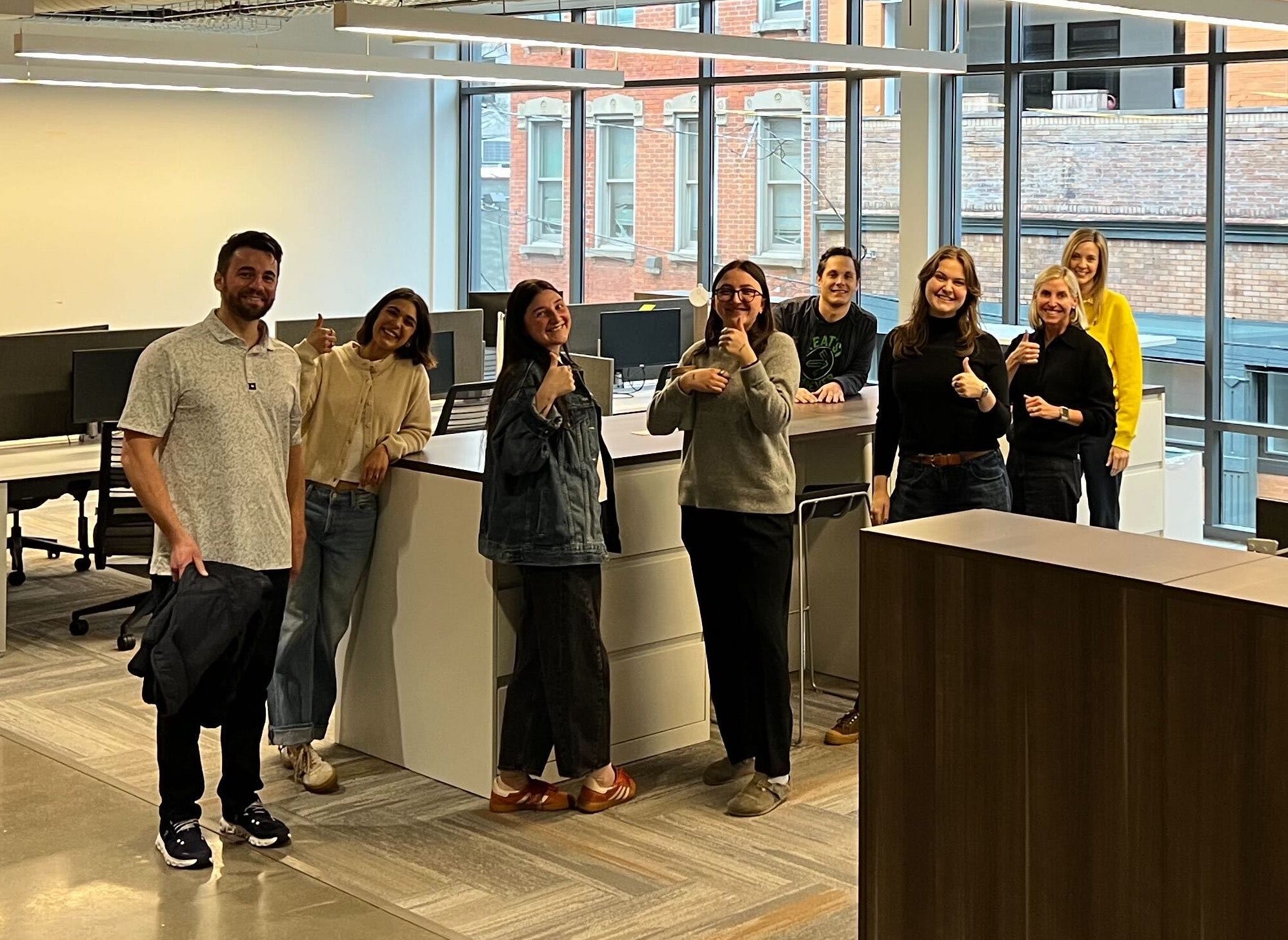
Nearly two years ago, I announced the launch of A2 Influence, a reboot of the startup we sold in 2020, aimed at bringing our dream team back together and delivering click-worthy custom content and influencer campaigns.
A big difference in this reboot, and a first for me in founding startups: I’m not the CEO. I’m the Chairman, investor, and maybe the grandfather figure. Age-wise, I’m getting close, as a few of our newer hires are younger than my daughters.
It’s been a unique growth opportunity for me, our CEO, Rob Reinfeld, and the people he has brought together. In what feels like a flash, the team has gotten well into the $millions in revenue, is profitable, and has built long-term partnerships with some of the world’s largest brands and retailers. Our baby is growing up.
They’re also now in double digits in terms of employee count, which means pulling the whole team together for an offsite is critical to kicking off the new year well.
I was invited to join the event, so I didn’t technically “crash” it, but I’m more of an observer than a participant now.
It was a blast to watch this group grow before my eyes, and in the process a few things struck me that are worth sharing with leaders who are interested in building better…
(Hint: That’s you!)
You’re Getting a Free MBA
When I was being recruited for my marketing job at Procter & Gamble in the late ‘90s, one of the selling points from current employees was, “You’re going to get a free MBA while you work.”
They didn’t literally mean they’d pay for tuition, and most of us being recruited were coming out of actual MBA programs. The point was that the responsibilities were high from the first day, and we would learn rapidly by leading a very big brand business. The company invested in training and was extremely transparent about decision-making.
A few years later, my P&G friends and I left to build a digital marketing agency, and we brought this mentality with us without really thinking about it. We regularly shared revenue and profit numbers. Nearly every team member was involved in creating and presenting a training. Our CFO, Michael Graham, kept an open-door invitation for any employee who wanted to dig deeper into our numbers. His clear, patient explanations were legendary.
So it was a pleasant, but not unexpected, surprise when we heard our agency employees spontaneously say, “Working here is like getting a free MBA.”
Years later, at my startup, Ahalogy, we continued this tradition of business transparency and training. Small teams were given ownership and accountability, enabling them to learn from each decision. And another star CFO (turned COO), Ryan Watson, bought his own brand of patient explanations.
Last week, I saw it happen all over again at A2: a small company with transparent operations working together to understand customer needs, discuss financial trade-offs, and make key decisions.
So when asked to say a few words at the start of their offsite, I made sure to let our early-career employees know they are getting a business education that would serve them for a lifetime.
A claim like this may be a recruiting message that’s worth highlighting when you’re a small business—IF you make transparent decisions, invest in training, and give plenty of ownership and accountability to even the most junior employees.
Everyone is Your Team
At another point during the hours of discussion, someone shared the story of a client who assumed we had a 20-person sales team because we moved so quickly. That got a big laugh since our entire employee count is barely half that number.
But behind the mistaken assumption lay an insight: this client had seen a high-functioning team that felt much larger.
That’s because each function is cooperating to deliver our end product and service. Our two full-time sellers are backed by everyone in the company. When there is a quick need or opportunity, everyone jumps in to help.
But it’s not just in Sales. Our Design Team is backed by everyone. The Influencer Team is backed by everyone. So is Media, Strategy, and Client Success. This is the beauty of One Team with One Dream: Everyone knows and supports each other to overcome challenges and deliver value to the client.
It’s a lot easier to get this kind of partnership in a small company, of course. But it can be done at BigCos, too. A few months ago, I told the story of how our agency scaled up to nearly 500 employees by breaking up into smaller, cross-functional teams that effectively ran their own businesses.
Something magical happens when your team clicks like this. There’s a separation in skills and tasks, but an equal desire to win. The only fear is letting your teammate down when they need you.
Becoming Our Best
Like any good all-company strategic discussion, we spent a good chunk of time discussing where we want to focus our client partnerships and product/service development.
My usual default would be some version of SWOT, competitive landscape, and future trendspotting.
But something else that emerged before we dove into the frameworks was very new to me: What kind of work do we want to do?
That conversation kept coming back to being strategic and leading our clients’ thinking. Phrases like:
“We’re at our best when we give clients what they ask for as well as what we think is best for them. Sometimes we even suggest smaller budgets than what they originally planned to spend with us.”
“We enjoy making strategic recommendations, educating our clients, testing new tactics, and handling tricky brand challenges.”
“We know clients need this kind of help more than ever, and we really love the chance to stretch our brains in day-to-day work.”
A big outcome of the discussion was a commitment to double down on our strategic thinking. SWOT frameworks be damned—this is what felt right. Let’s build the company of our dreams!
How did we get to this? All I have are hypotheses:
First, since we’re not VC- or PE-backed or need an exit to achieve portfolio investors’ expectations, we don’t need to blitzscale toward certain industry-defined growth goals.1
This also gives us the freedom to invest our time in building long-term relationships with clients and partners. Last week, two friends on the client side told me that startups they work with are beginning to pressure them to pull contracts forward and pay new fees for old work. These companies, like many others, are feeling renewed pressure to get profitable or hit numbers that might justify another round of funding.
And I’ve never heard of any client getting better service after a startup they loved was acquired.
Second, the A2 leadership team has decades of industry experience, working with the world's biggest brands and retailers. They know there are plenty of clients out there who want the strategic thinking we offer. We don’t have to work with companies that treat us like order takers.
Combined, we lack the fear-based pressure that most companies are burdened with.
But whatever the reason, I’m thrilled.
First, it’s just a brilliant framework in its own right. It means playing to our strengths, and it is a path to competitive differentiation. More importantly, by aligning work with what people love most, the output is naturally superior, and we do more work for a longer period with the kind of clients who best align with who we are.
It also happens to be a darn good way to avoid the AI threat.
Most importantly, this mode of building means our team gets to craft the company of their dreams—without requiring complimentary snacks or massages to distract them from the awfulness that other jobs entail.
Ending on a High
While nothing was contentious, the closest thing we had to a fear in our discussions was the threat of losing the special culture and connections we have so far as growth accelerates.
If we’re lucky, we’ll keep doubling sales and staff in the years ahead. At some point, we won’t fit everyone in a small conference room or know as much as we do now about every employee’s likes, dislikes, and pets’ names.
But growth brings opportunity for all of us—in work and far beyond. It’s baked into human nature.
As we traded Slack messages debriefing the trip, our CEO, Rob, issued the line of the week:
“We really believe there’s no problem we can’t tackle.”
I can think of no better measure for what happens in a High-Performing Organization.
If you like my writing, feel free to click the ❤️ or 🔄 button on this post so more people can discover it on Substack 🙏
Want to Go Further?
Anyone can schedule a chat during my open Office Hours to discuss questions, provide feedback, network, or explore any other topic. My primary value lies in helping people strategize and self-examine to discover their best path forward. No charge accepted. You can also reach me on LinkedIn or by email.
I’m a co-founder of Fleet, a holding company for services businesses. We invest in leaders ready to start their own companies (we also do some M&A). If you’ve ever thought about starting your own professional service business but need financial or other support, hit that schedule link above. ^^^
Ironically, we’re growing faster and more profitably than the vast majority of VC-backed marketing-tech startups. (I can’t help being the bragging grandparent!)
You’ve got me so hyped on A2 now! Where do I sign up?
This is a reflection on investment in the right people and finding them instead of throwing cash and backing for a conclusion. Love seeing this in action.
I found myself wishing I could be a fly on the wall and watch you in that environment, the almost grandpa role model, putting that special vibe of seeing people for who they are into the atmosphere in a business environment. It flips the "human resources" idea on its head. It's the business that becomes the resource base that is used for human success, not the other way around.